Speed Is the New Salary: Why Your Interview Process Is Losing Candidates Who Already Said Yes
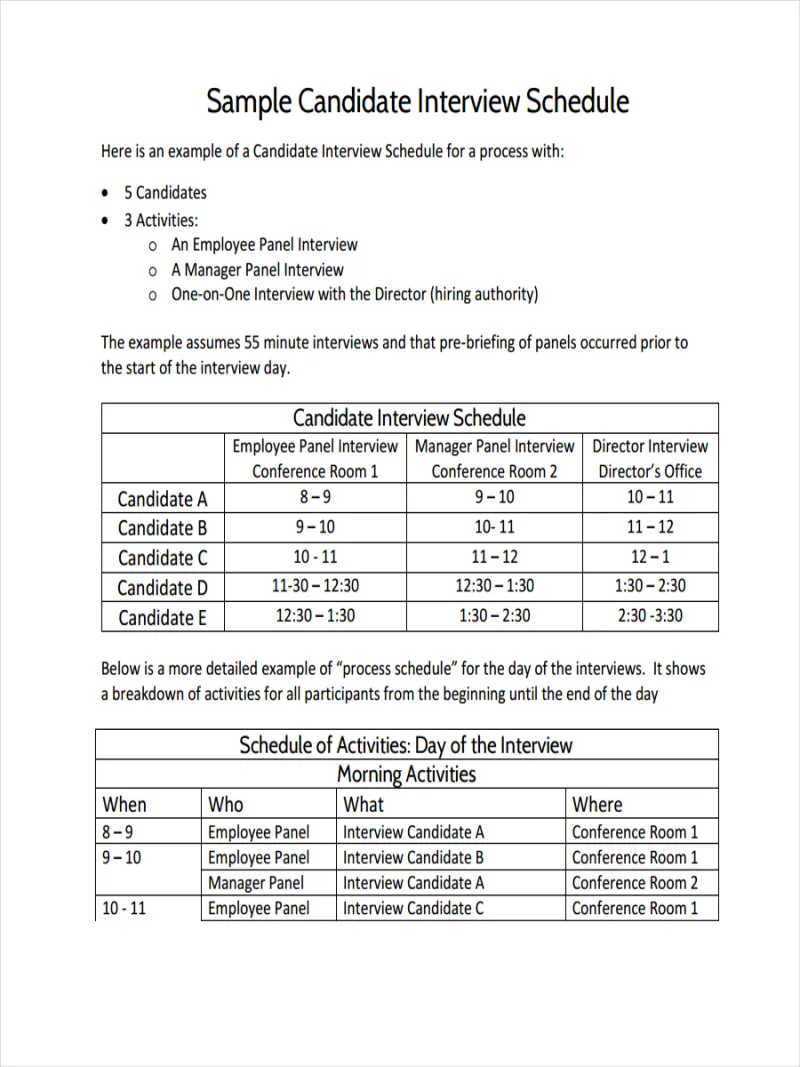
Photo: frustrated job candidate waiting for interview schedule calendar, via images.examples.com
Here is the arithmetic that should keep every hiring manager up at night: a strong candidate in today's US market typically receives an offer within ten to fourteen days of their first interview elsewhere. If your process requires a phone screen, a hiring manager call, a panel, a take-home exercise, a final loop, and a background check — sequenced across separate weeks — you are not running a hiring process. You are running a farewell tour for your own top choice.
The uncomfortable truth is that process length has become a competitive variable on par with compensation. Candidates talk about it the way they talk about pay: in specific, comparative terms. "They got me an offer in six days" and "they needed five weeks to schedule a second round" are the two sentences that decide where talented people end up working.
Where the Time Actually Goes
When you decompose a typical mid-level hire, the culprit is rarely any single evaluation. It's scheduling friction. A panel requiring four calendars to align can easily consume ten business days on its own. Add a take-home assignment with a one-week turnaround, a decision meeting that waits for the next leadership offsite, and a background check initiated only after the offer is approved, and a process that should take two weeks sprawls across six.
The data on candidate drop-off is unambiguous: rejection rates by applicants climb steeply once a process passes the three-week mark, and they climb for a simple reason — the candidate's market doesn't pause while your calendar resolves. Every additional week is a week in which a competitor can extend an offer, and in which the candidate's enthusiasm, the most perishable asset in recruiting, quietly depreciates.
The Playbook for Compressing Without Cutting Corners
The good news is that the fastest hiring organizations are not skipping evaluation. They are restructuring it. Four practices show up consistently:
Pre-scheduled interview blocks. Leading employers block interview windows before a role even opens, the way medical offices hold same-day slots. When a strong candidate clears the screen, the full loop happens inside one or two days — not across three weeks of calendar Tetris.
Parallel, not sequential, evaluation. Instead of a phone screen, then a manager call, then a panel, then a final, high-performing teams run assessments concurrently and consolidate debriefs immediately. One structured day of interviews can replace a month of staggered rounds while producing richer comparative data.
Same-week decision frameworks. Some companies now operate an explicit rule: every interview stage ends with a scheduled decision, and no candidate waits more than 48 hours for a verdict. The discipline matters more than the timeline itself — it forces interviewers to commit to evaluations while impressions are fresh.
Background checks that start early, with consent. Initiating verification after the offer is a relic. With candidate permission, beginning checks at the finalist stage removes the single most common source of post-offer delay.
What Speed Signals
There is a second-order benefit that has nothing to do with winning talent races. A fast, well-organized process is itself evidence of how a company operates. Candidates reasonably infer that an employer that can't coordinate four calendars in a week will struggle to make decisions, respect deadlines, or move quickly once they're inside the building. Your hiring process is a product demo of your workplace — and slow processes demo poorly.
None of this argues for recklessness. Hasty, unstructured interviews produce bad hires, and a bad hire costs multiples of a delayed one. The argument is for intensity: fewer, better-planned evaluation moments, executed inside tight windows, with decisions attached to every stage.
The candidates you want most have the least patience. That's not entitlement — it's information. The market is telling you, with every offer they accept somewhere else, exactly how long your process can afford to be. For most organizations, the honest answer is: shorter than it is today.